€250 million fund to tackle urban blight
€250 million fund to tackle urban blight
Ghent-based real estate developer Revive is working on a new investment fund worth €250 million—a record-breaking amount. Belfius and PMV have already committed capital, while Piet Colruyt has stepped out of the company’s shareholding.
Transforming brownfields—neglected or contaminated plots, often old industrial sites—into new residential or mixed-use developments is a niche segment in real estate. One of Belgium’s pioneers in this field is Ghent-based developer Revive.
Revive was founded in early 2009, just after the onset of the banking crisis—a difficult time to launch. Nevertheless, the company managed to secure funding, partly thanks to Piet Colruyt. A member of the family behind the Colruyt supermarket chain and a director at the family investment firm Korys, Colruyt helped launch Revive by leveraging his network. The initiative came from Nicolas Bearelle, who—like Colruyt—has a background in architecture.
The two initially each held a 50% stake, with an option for Bearelle to buy out his partner. That process began with a partial buyout (20%), and earlier this year, Colruyt sold the remaining 30%. The most recent transaction flew under the radar. “We now stand on our own two feet, which means Piet’s strategic role has diminished. But this is not a breakup—he remains on the board and we still speak regularly,” says CEO Bearelle.
Canning factory
Over ten years later, Revive employs 45 people and has delivered numerous large urban redevelopment projects. Earlier this year, it made headlines with its plans to revamp the former Marie Thumas canning factory in Leuven. Other current projects include Komet in Mechelen and the Ekla tower in Brussels. Revive has grown into Belgium’s market leader in brownfield redevelopment. “We’ve tackled close to 1 million m² of contaminated land, or are currently doing so,” says Bearelle.
To finance its activities, Revive sets up its own investment funds—pioneering this approach in Belgium in 2010—and also uses bank loans. Revenue comes from property sales and rentals, fund management fees, and profit-sharing at the end of each fund cycle. The size of the funds has steadily increased: from €20 million to €50 million, then €100 million, and now they’re going bigger.
“We’re working on a fourth fund of €250 million. That will be by far the largest private equity investment fund for real estate development in Belgium,” says Bearelle. “We aim to finalize it by the summer of 2020. In the meantime, we’ve already completed the first phase of funding: over the summer, we raised €59 million.”
Belfius
That initial capital comes from Belfius, which has been a long-term partner of Revive since its first fund. New to the table is PMV (Flemish investment company), which is committing €20 million right from the start. “That confirms the direction of our strategy.” In addition, several families who have previously invested are once again contributing capital. Bearelle does not name names, though in the past Revive has been backed by Korys and some family shareholders of AB InBev. Their identities remain undisclosed.
To reach the €250 million target, Revive will also seek capital abroad. “That amount is too large to raise solely in Belgium. There is interest from European funds, and we’re exploring a partnership with the European Bank for Reconstruction and Development (EBRD) for specific projects in Central Europe.”
The new funds will help fuel Revive’s international expansion. “Within ten to twenty years, most large brownfields in Belgium will have been redeveloped, and no new ones are emerging. Many of these sites are government-owned, and they’re released to the market very slowly.” Hence the shift to international projects.
Lech Walesa
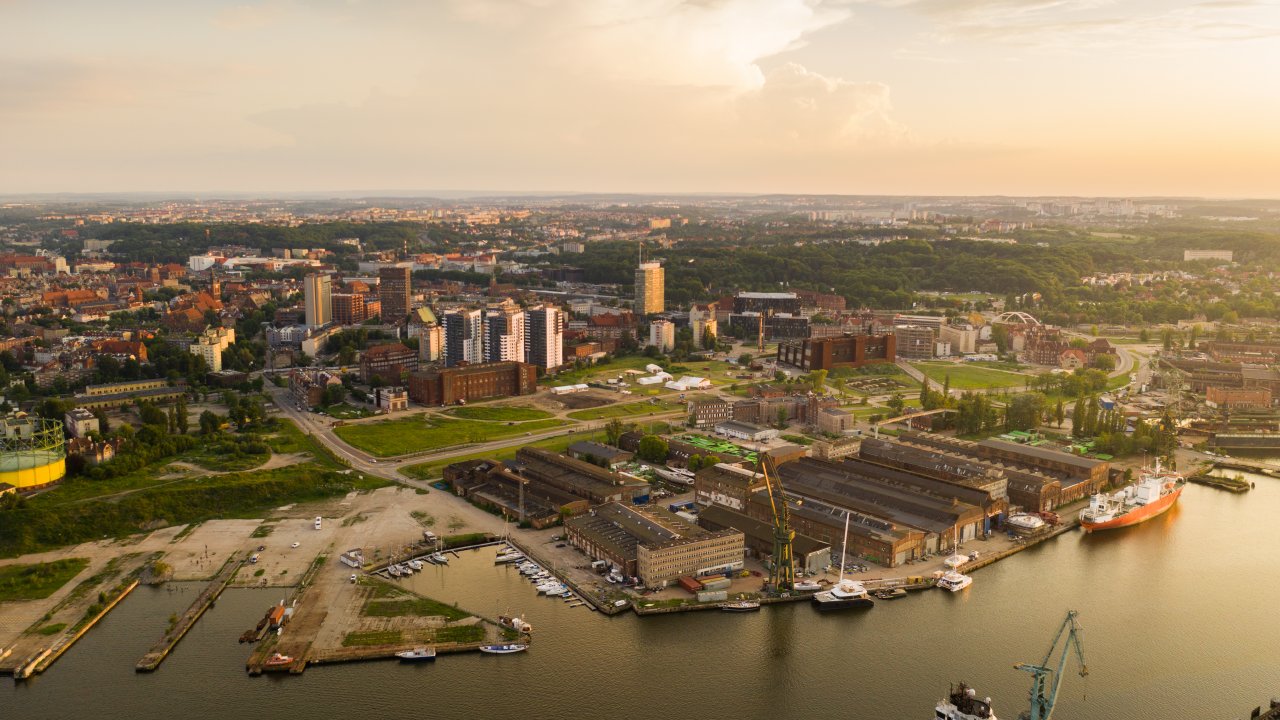
The first international deal is the acquisition—together with fellow Ghent developer Alides (owned by the Maes construction family)—of a 16-hectare site at the shipyard in Gdańsk, Poland. The site is historically significant as the birthplace of former Polish president Lech Walesa’s Solidarity movement. “It’s a complex case, but we like those. The project has a development potential of €700 million and over 300,000 m² of new construction. We’re also working on several deals in Portugal, where—like in Poland—we already have local teams. We’re looking at Germany as well. The Netherlands and France are also on our radar, though we’re less active there at the moment.”
What’s next for Revive? A doubling of the fund for round five? “We’re convinced we need to keep growing. We’ll see. We’re still reflecting on how we want to shape future development,” Bearelle concludes cautiously.
Source: De Tijd, Bert Broens, 5/12/2019, This is an automatically generated translation of the original article, Link to original article.